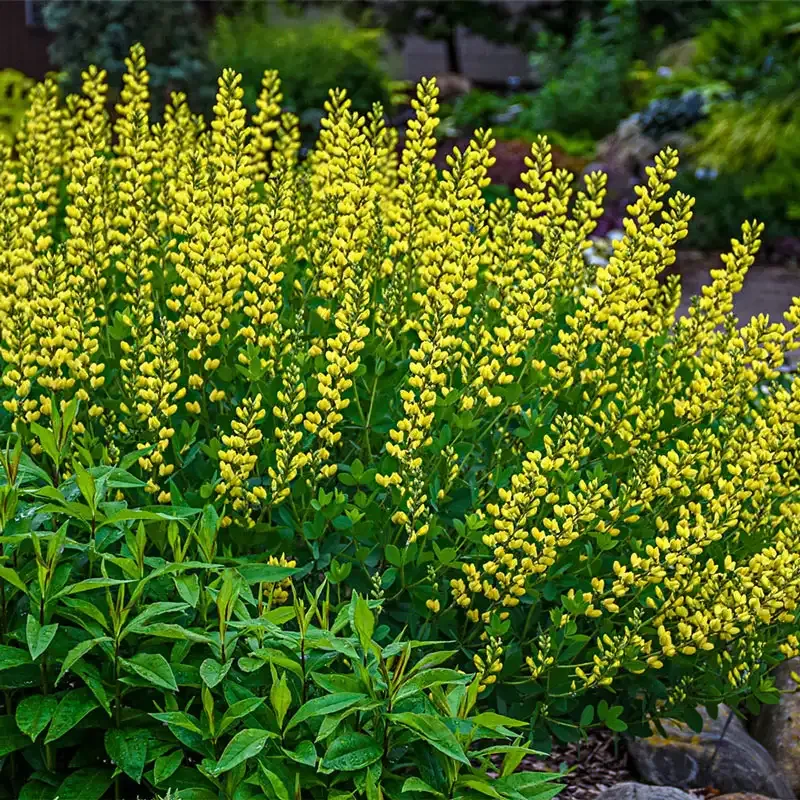
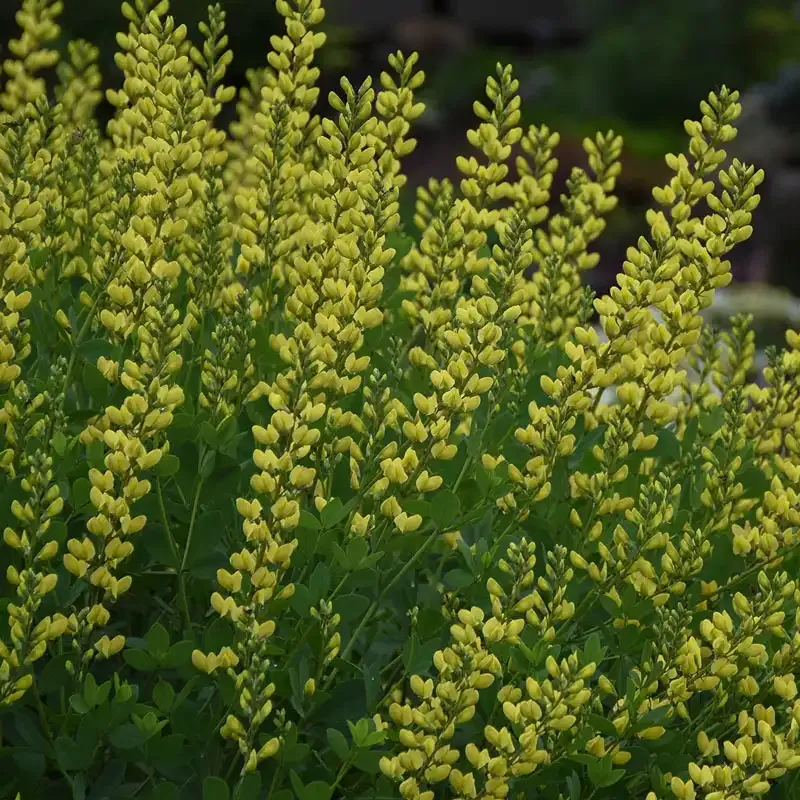
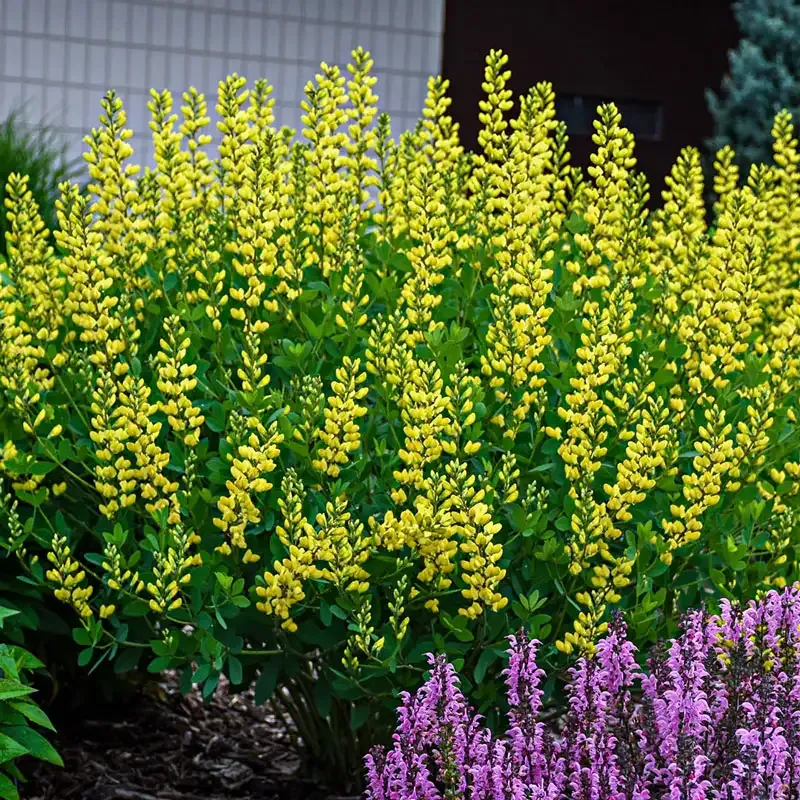
American Goldfinch Baptisia (Baptisia sphaerocarpa) Native Perennial
$14.99
- Features vibrant, pea-like yellow flower spikes that bloom in late spring.
- Displays deep green, clover-like foliage that maintains visual interest throughout the season.
- Demonstrates high drought tolerance once the deep taproot system is fully established.
- Serves as a functional host plant for native butterfly larvae and attracts local pollinators.
Overview of American Goldfinch Baptisia
The American Goldfinch Baptisia, scientifically known as Baptisia sphaerocarpa, is a robust herbaceous perennial native to the central United States. This plant is recognized for its architectural form and ability to thrive in various environmental conditions once acclimated. It produces upright racemes of bright yellow flowers, providing a distinct vertical element to garden borders and native plant installations.
Growth and Maintenance Characteristics
This species develops a significant taproot system, which contributes to its long-term stability and drought resistance. Gardeners should note that due to this root structure, the plant is best placed in its permanent location early to avoid the stress of transplanting. While the initial growth rate may be moderate, the plant rewards patience with increased vigor and bloom density as it matures over subsequent seasons.
Environmental Requirements
- Soil Conditions: Prefers well-draining soil types to ensure root health. It adapts to various soil compositions, including clay and rocky substrates, provided drainage is adequate.
- Sun Exposure: Performs optimally in full sun to partial shade environments.
- Watering: Requires consistent moisture during the first growing season to support root development; thereafter, it exhibits tolerance to dry spells.
- Garden Utility: Functions as a reliable perennial that returns annually, requiring minimal pruning beyond the removal of spent foliage in late winter or early spring.
You May Also Like