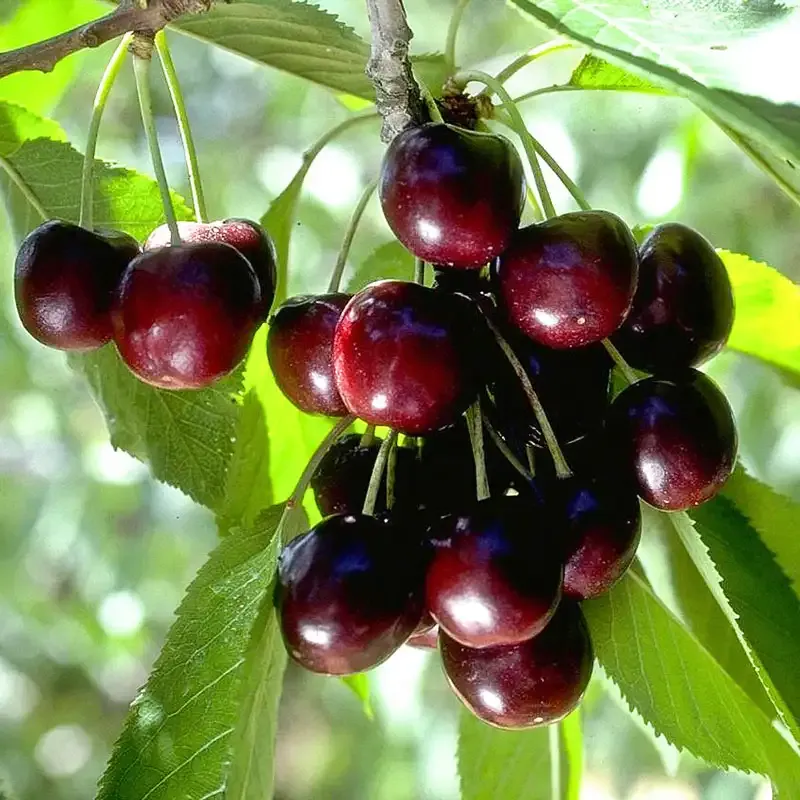
Black Tartarian Sweet Cherry Tree (Prunus avium)
$34.99
- Produces dark, heart-shaped sweet cherries suitable for fresh eating and culinary use.
- Deciduous growth habit with vigorous branching suitable for standard orchard spacing.
- Requires cross-pollination with compatible sweet cherry varieties for consistent fruit set.
- Adaptable to various temperate climates with specific chilling hour requirements.
Options: 2-4 Ft. (Qty- 1) | Spring
Black Tartarian Cherry Tree Overview
The Black Tartarian Cherry Tree (Prunus avium) is a classic variety recognized for its dark, nearly black skin and deep red, flavorful flesh. This deciduous fruit tree is a staple in temperate climate orchards, valued for its consistent production of sweet cherries that ripen in the early to mid-season.
Growing and Maintenance Requirements
To ensure healthy development and fruit production, this tree requires well-draining soil with a neutral pH. Proper site selection is essential to avoid waterlogged roots, which can impact tree vigor. Regular pruning during the dormant season helps maintain an open canopy structure, promoting airflow and sunlight penetration to the inner branches, which assists in managing common fungal issues.
Pollination and Fruit Yield
This variety is not self-fertile. To achieve a reliable harvest, it must be planted in proximity to other compatible sweet cherry varieties that bloom at the same time. Cross-pollination is necessary for the development of fruit. Gardeners should verify local chilling hour requirements to ensure the tree receives adequate cold temperatures during winter to break dormancy and initiate spring flowering.
Pest and Disease Management
Maintaining a healthy environment through consistent monitoring is recommended. Providing adequate spacing between trees reduces competition for nutrients and minimizes the spread of pests. Implementing standard orchard management practices, such as clearing fallen debris from the base of the tree, contributes to a cleaner growing environment.
You May Also Like